Dry Needling With Electrical Stimulation: What It Is, Benefits & Side Effects

Dry needling with electrical stimulation combines thin needles with controlled electrical pulses to help reduce pain and make movement easier. Common side effects include temporary muscle soreness and small bruises, which usually go away within a few days.

Key Takeaways
Less pain, easier movement: Electrical dry needling can help calm down pain and make everyday movements more comfortable, giving you a chance to work on your rehab without constantly fighting through discomfort.
Side effects are usually mild: You might feel sore for 24 to 48 hours or notice a small bruise. The electrical pulses can also cause gentle muscle twitches during treatment.
At Phenom, dry needling is only part of the plan: We combine it with hands-on therapy, strength exercises and movement training when it makes sense for you. The goal isn't just temporary relief. It's getting you back to doing what you love.
What Is Dry Needling With Electrical Stimulation?
Dry needling with electrical stimulation is a treatment that uses thin needles and controlled electrical pulses to stimulate specific muscles and other soft tissues.
It sounds more complicated than it actually is.
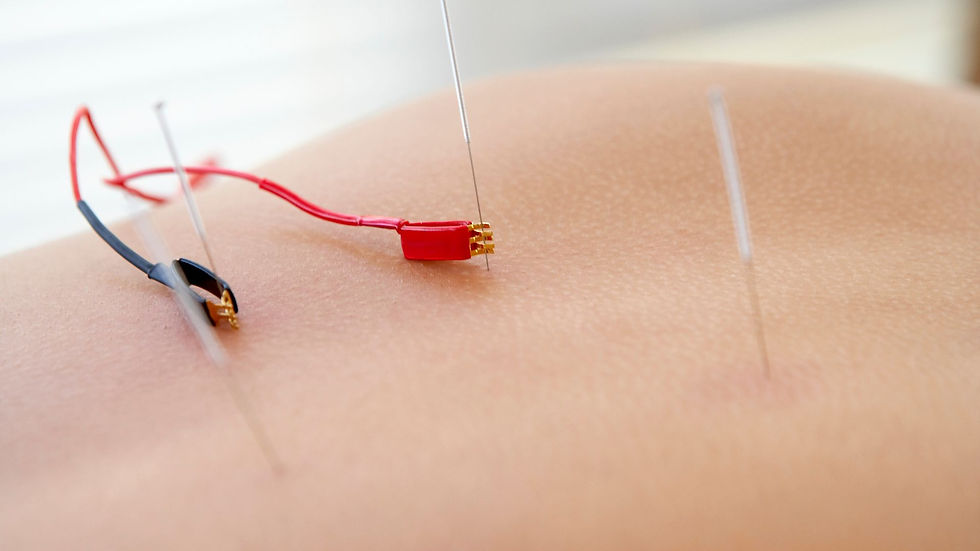
With regular dry needling, we insert very thin, sterile needles into targeted areas. Nothing gets injected. No medication, no fluid. That's why it's called dry needling.
Imagine those same needles connected to a small device with tiny clips attached to their handles. The device sends controlled electrical pulses through the needles while they stay in place. This gives the nearby nerves and muscles repeated stimulation without us having to move the needles by hand.
Unlike the electrical stimulation you may have seen with sticky pads on the skin, this method delivers the pulses directly into the tissue through the needles.
You might also hear it called electrical dry needling or dry needling with e-stim. Different names, same basic idea.
What Are the Benefits of Electrical Dry Needling?
Electrical dry needling can help ease pain and make movements like bending, reaching overhead or exercising more comfortable.
Maybe your lower back starts aching every time you bend down to pick something up or get out of the car. If dry needling helps settle that pain, those everyday movements can start feeling easier.
That's a good start. But feeling less pain doesn't automatically mean your body is ready for everything you want to throw at it.
Think of it this way. Dry needling can help turn down the volume on pain. Your rehab is where we work on building your body back up.
Research on people with shoulder pain found that electrical dry needling helped reduce pain and made everyday activities easier. People receiving regular physical therapy improved too. So far, research hasn't clearly shown that one works better than the other.
At Phenom, we don't use dry needling to replace physical therapy. We may add it to your rehab plan if we think easing your pain could help you get more out of your exercises.
Because the real win isn't how you feel lying on our treatment table. It's what you can do when you get off it.
What Are the Side Effects of Dry Needling With Electrical Stimulation?
The most common side effects of dry needling with electrical stimulation are temporary muscle soreness, small bruises and occasionally a tiny spot of blood where a needle went in.
Before you head home, we'll go through your aftercare plan together so you know what to expect, how to care for the treated area and when to give us a call.
Most reactions are mild and don't last long. Here's what you might notice:
Muscle soreness: Think of that achy feeling the day after a tough workout. The treated area may feel similar for 24 to 48 hours.
Small bruises or bleeding: You might notice a tiny bruise or a spot of blood where a needle went in.
A temporary pain flare-up: Sometimes the area feels a little more irritated before it settles down.
Feeling lightheaded or tired: Some people feel dizzy or a bit wiped out right after treatment.
Now, there's a difference between normal post-treatment discomfort and something you shouldn't ignore.
Severe or worsening pain, numbness that won't go away, spreading redness or fever aren't typical side effects. These are signs that something may be wrong and need medical attention.
Serious complications are rare, but they can happen. For example, needling near your chest or upper back carries a small risk of puncturing a lung, called a pneumothorax.
Chest pain or trouble breathing afterward is an emergency, so call emergency services right away.
And if you're unsure whether what you're feeling is normal, give us a call. We'd much rather talk it through with you than have you Googling your symptoms and worrying about every worst-case scenario you find.
Does Electrical Dry Needling Hurt?
Electrical dry needling can feel a little uncomfortable. You might feel a quick pinch or dull ache when the needles go in, followed by gentle pulsing or muscle twitches when the electrical stimulation starts.
Your calf might give a little jump even while your leg is completely still. That's the electrical stimulation making the muscle contract, not you moving it.
Some muscles can feel more sensitive than others.
You might feel a deeper ache in the muscles between your neck and shoulder. Or a quick twitch in your glutes. Other spots you might barely feel at all. It depends on where we're treating you and how your body responds.
The needles usually stay in place with the electrical stimulation running for about 10 to 30 minutes. The exact time depends on the area we're treating and what makes sense for you.
And you don't get extra points for toughing it out. If something feels too strong or painful, tell us. We'll adjust the intensity or stop.
Everyone here is so professional and so kind it makes what feels like an anxiety-inducing task like a walk in the park. Tiffany Brookover
You're the one feeling the treatment, so we want to hear from you throughout the session. You shouldn't have to lie there wondering whether you're supposed to put up with the discomfort.
Is Electrical Dry Needling Right for You?
Electrical dry needling can be a good option if pain is making it harder to move or exercise, but it's not safe or necessary for everyone.
Before we recommend it, we want to understand what's causing your pain and whether anything in your health history could make the treatment risky.
Here's how we look at it.
Your situation | What it means for you |
|---|---|
It might help | You've got stubborn muscle pain or tightness that's making everyday movements difficult. We'll check whether dry needling makes sense for your problem. |
We need to check first | You're pregnant, recently had surgery or take blood thinners. We may need to take extra precautions or choose a different treatment. |
We avoid it | We won't put needles through infected skin or open wounds. We also avoid electrical stimulation if it could interfere with a pacemaker or another implanted electronic device. |
Now, this isn't a checklist for deciding whether you should get dry needling on your own.
Take blood thinners, for example. They don't automatically rule out treatment, but they do increase the chance of bleeding or bruising. That's something we need to know before we start.
And even if it's safe for you, that doesn't automatically mean it's what your body needs.
We're not here to convince you to get dry needling. We're here to figure out whether it's actually going to help you.
If it isn't the right fit, we'll tell you. And we'll find a better way to help you recover.
How Does Dry Needling With Electrical Stimulation Work?
Electrical dry needling works by sending small electrical pulses through the needles to stimulate nearby nerves. Depending on the settings, these pulses can make your muscles contract and change how your nervous system processes pain.
Think of your nerves as a two-way street. Some carry messages to your muscles, while others send information back to your brain.
Motor nerves tell your muscles when to contract. When the electrical pulses stimulate these nerves, your muscles can tighten and relax on their own. This is called an involuntary muscle contraction. You're not trying to move the muscle, but it moves anyway.
Sensory nerves send messages from your body to your spinal cord and brain, including signals related to pain. Electrical stimulation can change how your nervous system handles those signals. This is called pain modulation, which simply means your nervous system can adjust how much pain you feel.
But we're not using electricity to magically repair damaged tissue or reset your muscles.
Researchers are still studying exactly how these nerve responses contribute to pain relief.
How Does Phenom Fit Electrical Dry Needling Into Your Rehab?
At Phenom Sports and Rehabilitation, we combine electrical dry needling with hands-on therapy, strength exercises and movement training to help you get back to the activities you love.
Say your calf starts hurting 15 minutes into every run. We might use electrical dry needling to ease the pain, but we also want to understand why it keeps happening.
Maybe your calf isn't ready for the miles you're running. Maybe your ankle isn't moving as well as it should. Or maybe you've lost some strength after taking time off.
Each of those problems needs a different approach.
If your ankle is stiff, we might use manual therapy and mobility exercises to help it move better. If your calf is struggling with the demands of running, strength training can help it handle more load. And if the way you're running is part of the problem, we can work on your running technique too.
And yes, you'll have exercises to work on between visits. We'll make sure you know what to do and why you're doing it.
We'll choose what makes sense for you, see how your body responds and adjust your plan as you improve.
They do an incredible job of giving you exercises and treatments that are challenging yet manageable so that you make progress as fast as possible. Mark Pavol
If pain keeps getting between you and the things you love doing, come see us at Phenom in Arvada. We'll take a look at what's going on and put together a plan to help you get back to it.
Frequently Asked Questions About Electrical Dry Needling
Is electrical dry needling the same as acupuncture?
No. Both treatments use thin needles, and both can involve electrical stimulation, but they come from different approaches. Acupuncture is rooted in traditional Chinese medicine, while dry needling focuses on muscles, nerves and movement problems identified during a physical therapy evaluation.
Can electrical dry needling help with plantar fasciitis?
Yes, it can help some people with plantar fasciitis, a common cause of heel pain. One clinical study involving 111 patients found that adding electrical dry needling to exercises and other physical therapy treatments improved pain and foot function more than those treatments alone. That doesn't mean every painful heel needs needles, though.
How many electrical dry needling sessions will I need?
There's no set number of sessions that works for everyone. Some people notice changes early, while others may need several treatments. We'll look at how you're responding and whether the treatment is helping you make progress before deciding if it's worth continuing.
Can I exercise after electrical dry needling?
Yes, you can usually stay active after treatment, but you may want to take it easier if the treated muscles feel sore. A gentle walk or light movement is often fine. We'll help you decide what makes sense for your workout or rehab exercises that day.
How should I prepare for an electrical dry needling appointment?
Wear comfortable clothes that make it easy to reach the area we're treating. Eat normally, drink some water and let us know about any medications or medical devices you have. You don't need to do anything fancy to prepare. Just come ready to tell us what's been bothering you.
Further Reading
Dry Needling: What You Should Know | ChoosePT. Learn how physical therapists use dry needling and what happens during treatment.
Dry Needling and Lower Back Pain | NIH. See what researchers know about dry needling for back pain and where more research is needed.
Electrical Dry Needling for Shoulder Pain | PubMed. Explore research comparing electrical dry needling with conventional physical therapy.
Electrical Dry Needling for Plantar Fasciitis | PubMed Central. Read about a study examining electrical dry needling combined with other treatments for heel pain.


